
A day of drying out
Field notes from a day trip: from casting off in Harlingen to the rising water off De Richel.
Field notes
Six hours in a place that will soon be gone
At six past nine the lines come off in Harlingen. It’s the kind of morning the Wadden serves most often: grey, a breeze from the southwest, coffee in the cockpit. On board are eight guests who didn’t know each other an hour ago. Under way, the skipper explains where we’re going. Not to a harbour, but to a sandbank that only exists at low water.
Navigating here doesn’t happen in straight lines. You follow the channel, work around the watershed, and the tide sets the timetable. Somewhere halfway, the boat turns out of the fairway, towards De Richel. It gets shallower. The skipper sounds the depth, picks his spot, and then we wait for the water to leave us.
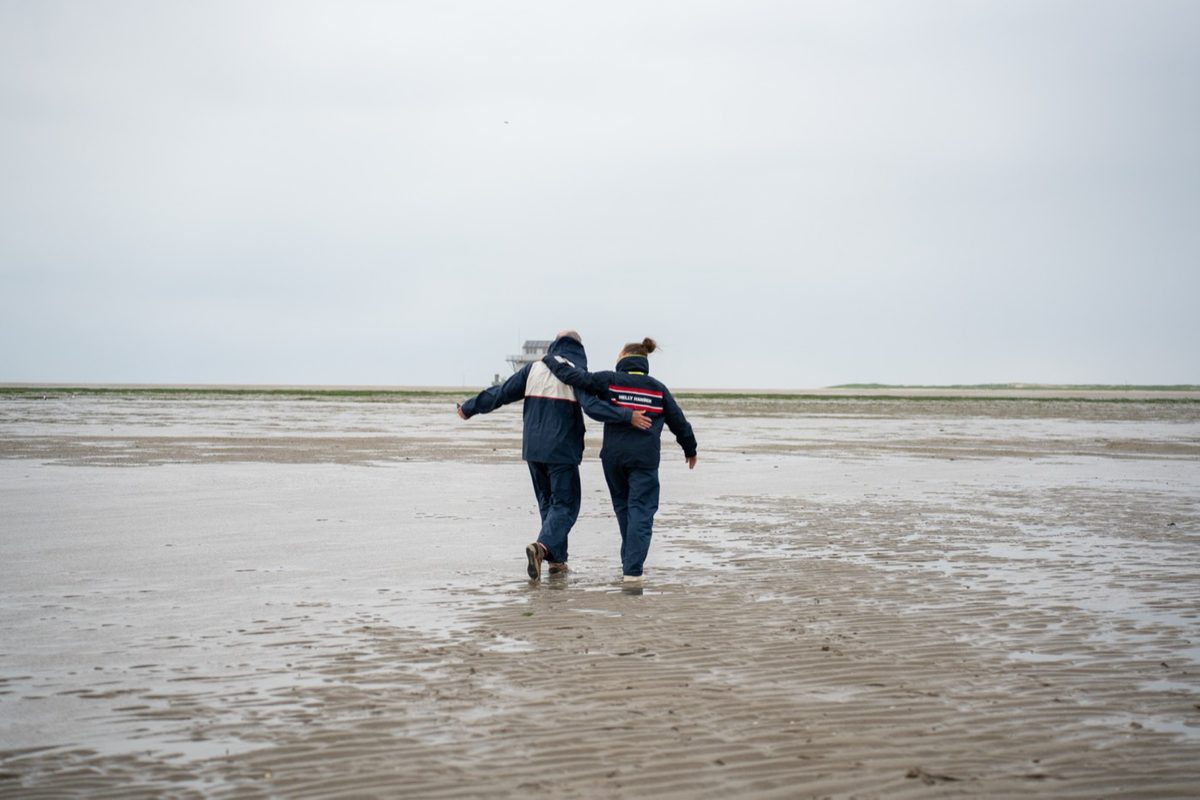
First the boat heels a little, then nothing at all. The Wadden dries out and the world becomes very big and very quiet at the same time. We step off the boat onto the sand and walk on the seabed. Ripples underfoot, cockles everywhere you look. Whoever wants to walks out across the flat; whoever doesn’t stays by the boat with the thermos. There are seals too, further off on their own bank. We keep our distance. It’s their home.
The rising water announces itself. First the little channels fill, then it taps against the hull, and at some point the boat is simply rocking again. Nobody had to do anything; the Wadden gives back what it lent you. Under sail back to Harlingen with the evening light. At four past nine the lines are fast again, twelve hours after they came off. Everyone looks at the sea differently than they did this morning.
Want a day like this yourself?
Every planned trip shows how the water stands that day. If your date isn’t listed, we’ll look together at what the tide allows.